
Weekly Rewind: 6/5/26
New York Decides on Surveillance Pricing Ban As Colorado Governor Vetoes, and more.

By Zachary Hagen-Smith and Katie Hettinga
Welcome back to The Economic Populist’s Weekly Rewind. Every Friday, we’ll briefly recap the week’s biggest news, updates, and developments in the fight against corporate power.
Here’s what to know this week.
New York Decides on Surveillance Pricing Ban As Colorado Governor Vetoes
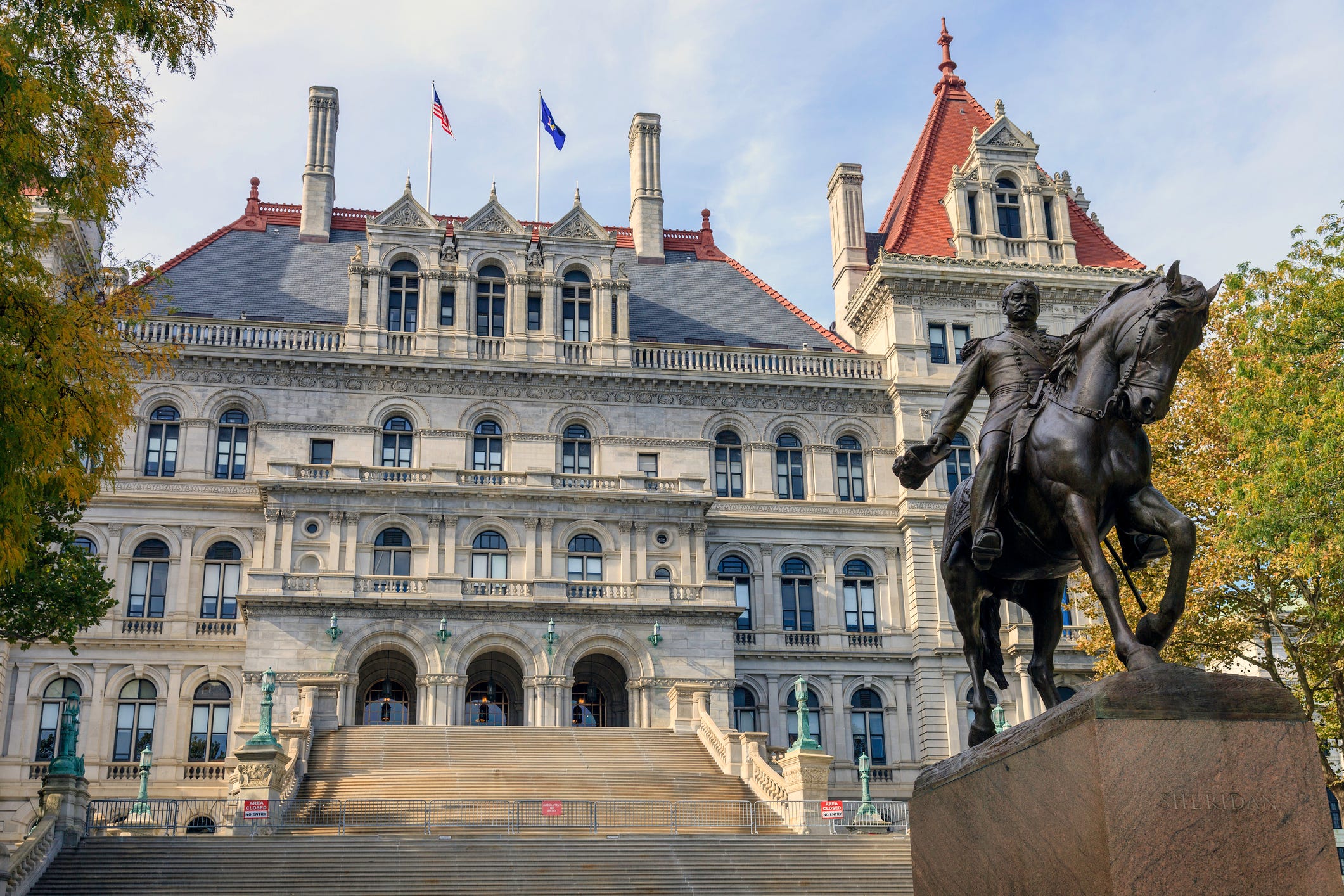
The New York State legislature just passed landmark legislation that would ban surveillance pricing statewide — but with a new caveat.
The One Fair Price Act, championed by Assemblymember Emerita Torres, if signed by Gov. Kathy Hochul, would mark New York as the first state in the nation to effectively ban corporations from using personal data to charge different people different prices for the same products (Maryland’s loophole-filled “ban” doesn’t qualify). The basic idea, per Torres: “New Yorkers don’t deserve to be spied on and they don’t deserve to be ripped off.”
Pretty good, right? But there’s one hitch.
Corporate lobbyists managed to secure the last-minute removal of a private right-of-action provision, preventing New Yorkers from suing if a corporation ignores the law and uses their data for surveillance pricing. Under this version of the bill, New Yorkers must rely on already overburdened state enforcers or the mercy of private arbitration, weakening the actual impact of the ban. Luckily, Governor Hochul can choose to restore citizens’ right to enforce the ban via chapter amendments.
The news isn’t as good in Colorado, where, earlier this week, Governor Jared Polis vetoed the surveillance pricing ban the state legislature sent to his desk despite polls showing 76% support from state voters. It’s far from over though. While Polis is terming out this year, Colorado State representative Javier Mabrey, who introduced the surveillance pricing ban, has promised that the bill will be back next session when a new governor is in charge.
Whether in the Empire State or the Rocky Mountains, we’ll be sure to keep you posted as the fight against surveillance pricing continues.
The Redone NAFTA Needs a Major Redo
In a surprisingly strange-bedfellows moment, Democrats in Congress, unions, civil society, and the Trump administration actually agree on something: the U.S.-Mexico Canada Agreement (USMCA) that Trump negotiated in his first term is not working for working people.
The USMCA is the renegotiated North American Free Trade Agreement (NAFTA) that Trump championed as the United States’ “most important trade deal… by far.” It came into force in 2020 with a mandatory six-year review required by July 1, 2026. The three signatories must come together and agree to extend the agreement as-is, agree to revised terms, or start annual reviews and attempts to extend it until the pact sunsets in 2036.
The Trump administration says it’s going to fix the agreement by addressing a handful of key issues, but whether these repairs will be sufficient to address deep structural problems remains to be seen. Prior to the June 1 deadline for countries to share their intentions ahead of the July 1 mandatory review, Canada announced it seeks to renew the agreement as-is for an additional 16 years. This reflects the retrograde trade policy of Canada’s Prime Minister Mark Carney, who, instead of recognizing that the old neoliberal model didn’t work, wants to double down on it. Carney’s perspective has led to Canada not engaging in the lead-up to the USMCA review even as the U.S. and Mexico have been in talks for months — in fact, the first round of U.S.-Mexico talks held in Mexico City focused on rules of origin for specific sectors, including automobiles and steel. Future negotiations were announced to focus on labor and agriculture.
This process creates an opportunity to reverse USMCA’s unacceptable outcomes. But doing so will require a major redo, which, like the original USMCA, could likely enjoy broad congressional support. The question is whether the administration plans to undertake that hard work, or just tweak the deal around the margins and try to dodge Congress.
Trump Corruption Driving Up Costs, Per New Report
Trump’s self-dealing and corruption have raised costs for everyday Americans across a variety of areas, according to a new report from AELP and our friends at the Groundwork Collaborative. As Groundwork’s Chief of Policy and Advocacy Alex Jacquez put it: “he’s not just lining his own pockets; he’s picking yours.”
Take healthcare. Trump has steered patients toward TrumpRX, a drug-pricing platform that benefits both pharmaceutical companies and a firm tied to his son’s business interests while obscuring cheaper alternatives. The result? Drugmakers that donated to his inauguration are keeping prices high and leaving Americans paying more out of pocket for prescription medications.
His healthcare corruption is running up the government’s tab, too. After Trump’s inaugural committee received roughly $11 million from Blue Cross, Centene, and other major health insurers with a presence in Medicare Advantage, the Trump administration backed off plans to effectively freeze government payments to Medicare insurers and instead granted them a payment increase. At the same time, his administration is reportedly even considering automatically enrolling older Americans in these private plans.
But it’s not just healthcare. The list goes on:
Datacenters? Trump rakes in millions from Gulf data center investors while Secretary of Commerce Howard Lutnick’s children cash in on $25 billion in data center deals. Meanwhile, the data centers the administration pushes continue to unleash higher electricity costs and debilitating pollution on communities.
Tax Prep? Trump canceled Direct File, a free IRS tax-filing option that would have saved Americans millions on tax preparation services, shortly after TurboTax’s parent company gave $1 million to his inauguration fund.
Travel? Trump’s transportation secretary, a former airline industry lobbyist, rolled back passenger compensation requirements and forgave airlines millions of dollars in penalties for failing to refund customers.
You can read more here.
Quick Hits
AELP is hitting the road! Our Main Street vs. The Merger roundtable series, highlighting the likely economic toll of the potential Paramount-Warner Bros. acquisition, starts this Saturday in Los Angeles with a town hall hosted by AELP senior fellow and former FTC commissioner Alvaro Bedoya and featuring comedian Adam Conover, FCC commissioner Ana Gomez, WGA West President Michele Mulroney, and more. AELP and Bedoya will also be hosting roundtables in New York on June 13 and Atlanta on June 16.
Illinois Governor J.B. Pritzker announced on Friday major data center policy changes, halting tax incentives for new data centers and calling for major reforms, including a ban on nondisclosure agreements, which, as we’ve covered before, let data center companies cut private deals that lock up local resources while keeping residents and elected officials in the dark.
CoStar Group, the commercial real estate behemoth behind Apartments.com, Homes.com, and other sales platforms, announced last week its acquisition of homebuilding data and analytics firm Zonda. CoStar — already waist-deep in antitrust lawsuits — stands to gain a chokehold on the entire real estate business, from construction to sales, threatening not only to squeeze out small- and mid-sized builders but also to dramatically raise housing costs.
Senior Fellow Olivia Kosloff co-authored a new Council on Foreign Relations report on how China could weaponize its control of pharmaceutical supply chains and the ways America could re-shore these vital supply chains.
Managing Editor Helaine Olen is out with a new piece in the Capitol Forum breaking down how a British antitrust authority’s veterinary reforms miss the mark, failing to get at the real driver of soaring vet bills on both sides of the pond: rapid corporate and private equity consolidation.
Research Director Matt Stoller joined MS NOW’s Ali Velshi on the airwaves this past weekend, explaining what the NextEra-Dominion utility merger means for American’s electricity bills. Read Stoller’s full breakdown of the deal in his BIG Newsletter.
Senior Fellow Bill McGee joined Vox for a deep dive on how big airlines are using the Iran War fuel hikes as a pretext to permanently jack up prices.
Our friends at the Roosevelt Institute launched the Good Life Agenda, a comprehensive policy playbook to take on costs, fight inequality, and make government work for working people.
ICYMI: State and Local Policy Director Pat Garofolo, on how D.C.’s utility regulator is letting Washingtonians’ electricity bills soar.