
Weekly Rewind: 5/29/26
California Assembly Passes Landmark Anti-Monopoly Bill, and more.

By Zachary Hagen-Smith and Rethink Trade
Welcome back to The Economic Populist’s Weekly Rewind. Every Friday, we’ll briefly recap the week’s biggest news, updates, and developments in the fight against corporate power.
Here’s what to know this week.
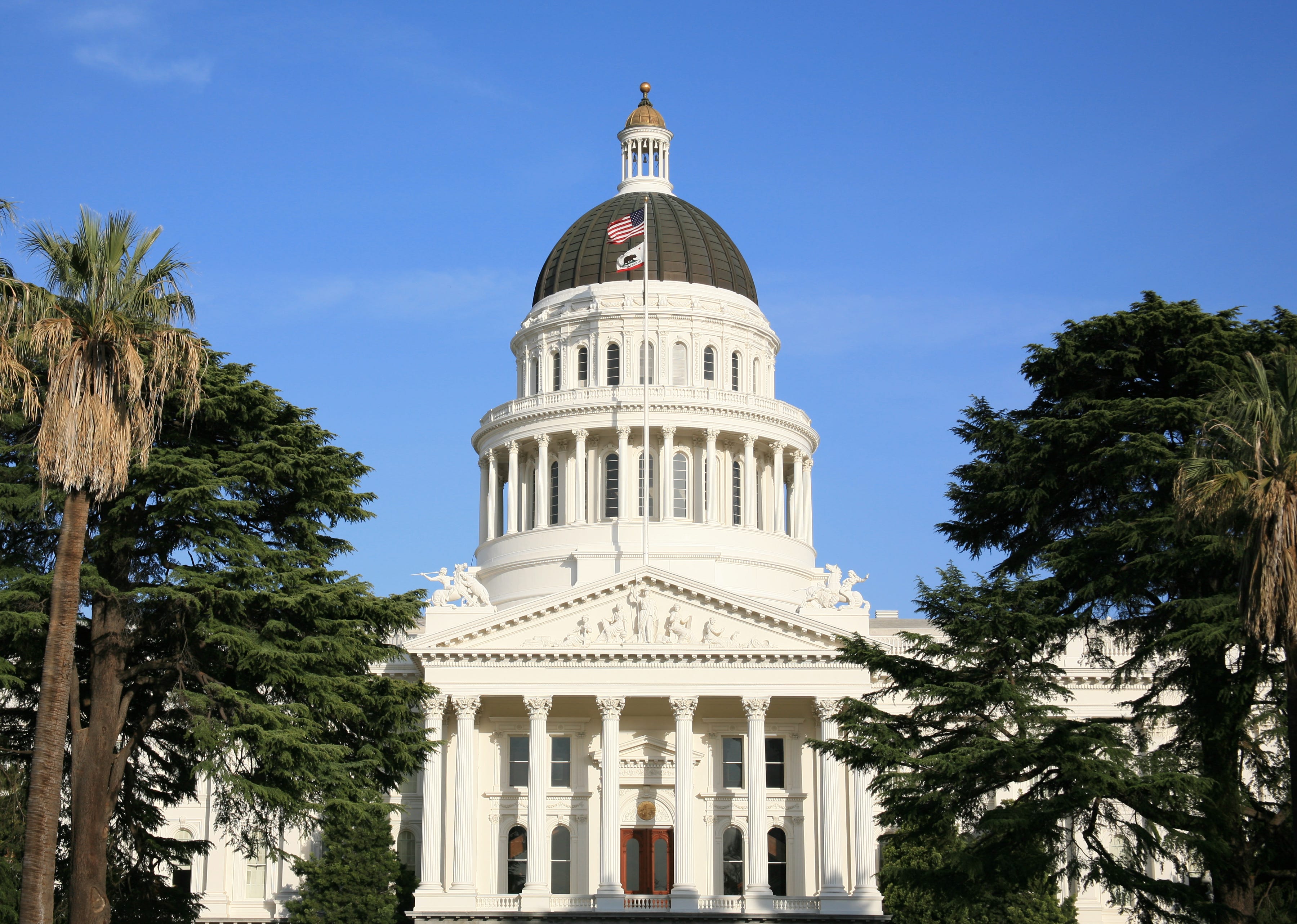
California Assembly Passes Landmark Anti-Monopoly Bill
The biggest overhaul of California state anti-monopoly enforcement in more than 100 years moved closer to becoming a reality after passing the State Assembly 44-16 on Wednesday night.
California prides itself on being the epicenter of creativity and innovation. The COMPETE Act is a long-overdue attempt to bring California back to its roots. Sponsored by Assembly Majority Leader Cecilia Aguiar-Curry, it would empower California to crack down on monopolistic abuses under state law. This would be a welcome alternative to the federal courts, where decades of corporate capture have dulled the original pro-competition intent of federal antitrust laws.
But monopolists aren’t giving up so easily. The COMPETE Act is the most lobbied bill in California’s legislative session. Trade groups led by the powerful California Chamber of Commerce want the COMPETE Act stopped. Something to know: in this lobbying blitz, the California Chamber is only representing its largest members. The bill exempts exempts 98% of California businesses, and it enjoys strong support from small-and mid-sized firms and the trade groups that truly represent their interests, ranging from Yelp to the Black- and Filipino-American Chambers of Commerce.
The COMPETE Act now moves to the California Senate, where lawmakers have until the end of August to determine whether it advances to Governor Gavin Newsom’s desk. Another fact worth knowing: Newsom has recently embraced the antimonopoly movement and appointed former Consumer Financial Protection Bureau Director Rohit Chopra to a new cabinet-level role coordinating consumer protection efforts across state agencies.
We will keep an eye on the COMPETE Act and update you as this bill makes its way through Sacramento. If you want to know more, check out this video for More Perfect Union, featuring AELP’s Lee Hepner, who helped draft the legislation.
Trump’s Art of No China Deal
Trump’s May visit to China displayed all of his worst tendencies. He arrived with a planeload of CEOs. There were no demands regarding the end of Chinese trade abuses, balanced trade, or human rights for Uyghurs in concentration camps. There were no demands that would help American workers and Main Street businesses. He also failed to secure U.S. access to rare earths necessary for domestic manufacturing and U.S. national security.
In exchange for pomp and circumstance, Trump was apparently happy to act like the junior partner in a show visit where very little was agreed to or achieved. Based on Trump’s readout, the purpose of his visit to China was not to address serious trade and human rights issues but to attend tours, parties, and photo ops with a gaggle of business executives pushing for their companies’ interests.
Challenging China is necessary to protect working people in the U.S. The Chinese government and many of the largest U.S. corporations are in cahoots on an agenda that maximizes their interests against the welfare and security of most Americans. But as Economic Liberties’ Research Director Matt Stoller explained in his BIG newsletter, the “China hawk” label is used to divide Democrats, making it seem that those critical of the Chinese government’s conduct are militaristic. Reminder: any conflation of challenging China with warmongering is a strategic effort to keep Trump’s CEO friends and the broader oligarchy super-rich.
NextEra Moves to Acquire Dominion in Record Utility Merger
NextEra Energy announced last week it would acquire Dominion Energy in a $66.8 billion deal. If completed, it will be the biggest power-sector merger in U.S. history, creating the nation’s largest electric utility and serving roughly 10 million customers across Florida, Virginia, and the Carolinas.
While executives framed the merger as necessary to meet rising electricity demand driven by data centers and even pledged $2.25 billion in temporary electricity bill credits, this is all just corporate misdirection. Investor materials make clear that NextEra believes it can accelerate Dominion’s growth by dramatically ramping up investment in less-than-necessary local projects, giving state regulators an excuse to let utilities charge ratepayers even more than they already do, and collecting an excess return on equity. And the bill credits? For each household, they amount to just $9.40 per month over only two years; as AELP senior fellow Marissa Gillett told the New York Times, “They think a big number is going to trick people into complacency.”
As the Energy & Policy Institute recently highlighted, it’s more than just costs at stake in this merger. In Florida, NextEra has a troubling track record: engineering election results via “ghost candidates,” spying on critical journalists, lobbying against a ban on shutoffs during life-threatening weather events, bribing politicians with jobs at fake organizations, and more. It’s so bad that in 2023 their own CEO had to abruptly resign.
While it’s up to federal and state regulators to reject this crooked deal, policymakers are pushing back against utilities’ rent-seeking. Last month, Reps. Greg Casar and Josh Riley introduced the Lowering Utility Bills Act, which would tighten FERC profit standards. Gov. Josh Shapiro separately directed Pennsylvania regulators to adopt a competitive equity auction to lower allowed utility profits. We’ll continue to keep a close eye on these developments and the broader fight against utility abuses.
Quick Hits
This June, AELP is hitting the road to take on the Paramount-Warner Bros. merger, hosting a three-part event series with Committee for the First Amendment, Democracy Defenders Action, Free Press, the Future Film Coalition, and the Writers Guild of America. Former FTC commissioner Alvaro Bedoya will be heading around country and sitting down with entertainment workers, political leaders, and even a celebrity or two to shine a light on how this mega-merger is going to hurt working people and small businesses of all kinds. Bedoya will be in Los Angeles on June 6, New York City on June 13, and in Atlanta later this month
In other news on the merger, Paramount CEO David Ellison met with DOJ staff this week, offering the same-old pinky-promise commitments — but no guarantees — about production and jobs. Meanwhile, California Attorney General Rob Bonta noted that structural remedies are likely in order for the Paramount-Warner case and that many other AGs may be interested in taking it on when the time comes.
It’s official: attorneys general are asking for a breakup of Live Nation-Ticketmaster. Following last month’s unanimous guilty verdict against Live Nation Entertainment, the plaintiff states submitted a remedies proposal last Thursday, demanding not just the divestiture of Ticketmaster, but limitations on exclusive ticketing as well as regulations on venue control.
Tennessee Governor Bill Lee signed the FAIR Rx Act into law, prohibiting pharmacy benefit managers (PBMs) from vertically integrating by running pharmacies — but CVS Health is suing to block the law.
CVS Health’s Aetna, the nation’s third-largest health insurer, announced it will cut reimbursement rates by 30% to 40% for mental health clinicians who use Alma, a practice management company.
Illinois State Sen. Omar Aquino’s Junk Fee Ban Act passed the Illinois Senate in a bipartisan 46–12 vote last week after advancing through the House in April by a 77–18 margin. Gov. Pritzker has pledged to sign the critical legislation over the summer.
The first round of negotiations between the United States and Mexico on the U.S.-Mexico-Canada Agreement (USMCA) took place this week. More bilateral talks will take place in the coming weeks.
A new piece from AELP senior fellow Hannah Garden-Monheit and AELP alum Bharat Ramamurti lays out how Congress could expand oversight of DOJ settlements to prevent corrupt arrangements like the proposed “Anti-Weaponization Fund.”
ICYMI: Research Manager Laurel Kilgour, on how the US Patent Office helped enable offshoring and how — thanks to pressure from AELP — it might be turning a new page.