
Weekly Rewind 3/27/26
Jury Hands Meta its “Big Tobacco” Moment on Child Safety, and more.

By Kainoa Lowman and Katie Hettinga
Welcome back to the The Economic Populist’s Weekly Rewind. Every Friday, we’ll briefly recap the week’s biggest news, updates, and developments in the fight against corporate power.
Now, here’s what to know this week.
Jury Hands Meta its “Big Tobacco” Moment on Child Safety
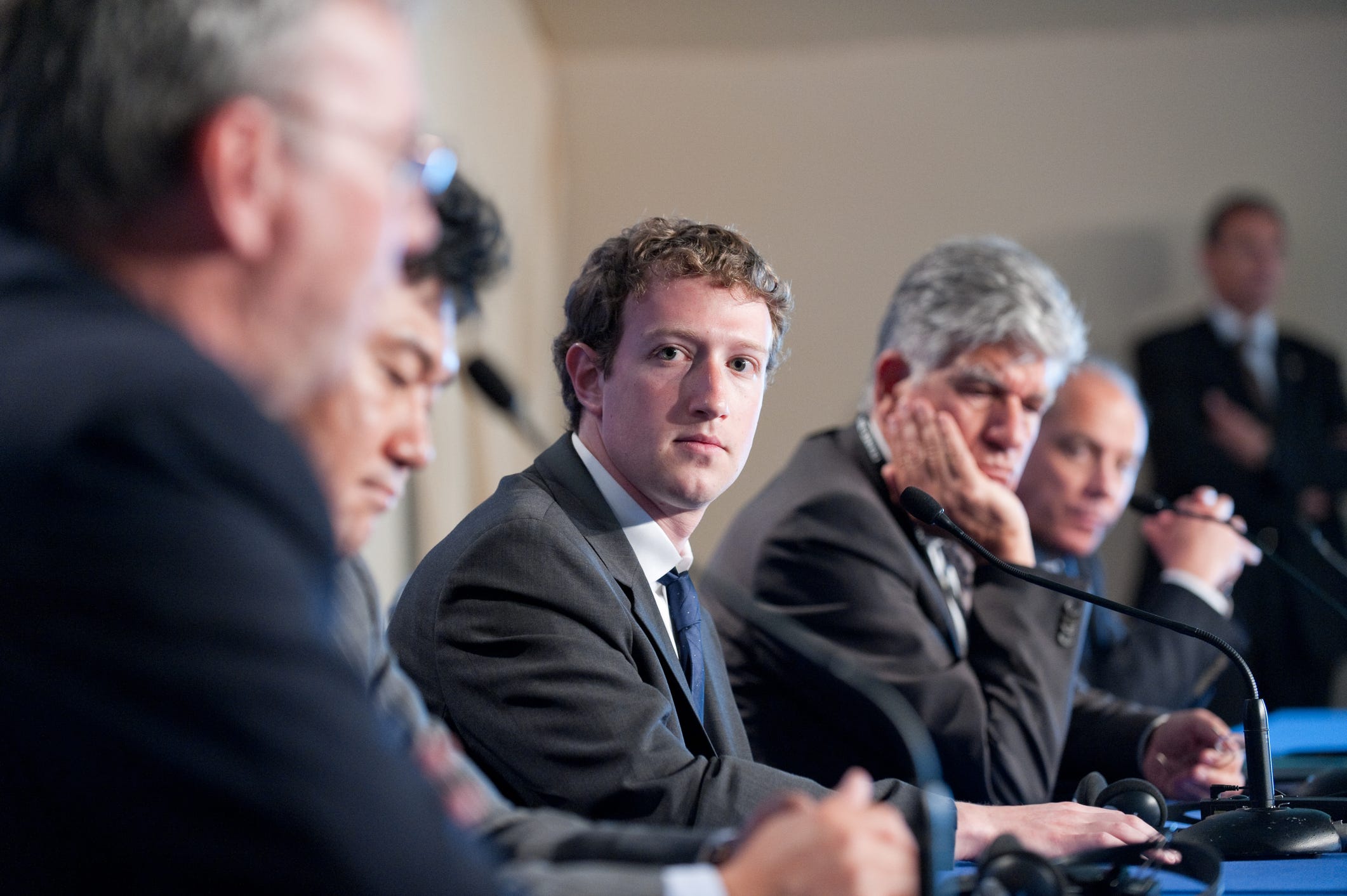
On Wednesday in Los Angeles, a jury in a landmark trial on online child safety handed Meta a major loss —a decision that is being called Big Tech’s “Big Tobacco” moment.
The case was filed on behalf of a now-20-year-old California woman, “K.G.M.,” who alleged that Instagram and YouTube deliberately hooked her as a child through addictive design features. The resulting compulsive use led to anxiety, body dysmorphia, and suicidal thoughts. The horrifying allegations are not groundbreaking. It is well-established that social media giants prioritize maximizing user engagement and profits over young people’s mental well-being.
Yet, until now, social media platforms escaped liability for these harms thanks to Section 230 of the 1996 Communications Decency Act, which says online platforms are not liable for content their users post. Judges have interpreted Section 230 expansively, protecting tech companies “from virtually any claim loosely related to content posted by a third party,” as one judge put it.
K.G.M.’s lawyers are among a new generation of plaintiff’s lawyers testing out a strategy to sidestep Big Tech’s Section 230 shield. To do so, they avoided any condemnation of the content being distributed, instead focusing on the technological design fueling social media addiction. They sued Meta under product liability laws, rather than content liability laws, essentially treating Meta like a manufacturer that has issued a defective and dangerous product.
This groundbreaking victory will almost certainly open the floodgates to other litigation, providing a favorable precedent for 1,600 other pending social media addiction cases filed by parents and school districts. The stock fell by around 8 percent after the decision—a significant hit, but one that suggests investors are waiting to see the result of Meta’s inevitable appeal.
Whatever happens in this case, it points towards a promising avenue for finally holding Big Tech accountable, which Research Director Matt Stoller wrote about last night. Despite years of scandals, judges have failed to make Big Tech stop harming kids, illegally undermining competition, or otherwise prioritizing their own financial interests over the health of American democracy and our economy. There have been some major courtroom wins, such as the Biden DOJ forcing the court to recognize that Google illegally monopolized the online search market. But even then, the judge let Google off with a slap on the wrist.
Ordinary Americans, on the other hand, know right from wrong and are furious about Big Tech’s many abuses and are proving much less timid about actually imposing consequences. As one juror in the Los Angeles trial said, “We wanted them to feel it. We wanted them to realize this was unacceptable.”
This jury is far from alone. Just two days earlier, a jury in New Mexico ruled in favor of the State in a lawsuit alleging Meta had harmed children, which will require the company to pay $375 million in damages. And last week, a jury found that Elon Musk committed securities fraud by manipulating Twitter’s stock price and ordered a $2.5 billion damages payment.
If juries continue to rule this way, companies like Meta will have to change their behavior. In an age of elite and corporate impunity, this would be a radical victory for democratic accountability. All too many in positions of power and authority are loath to hold giant corporations accountable, but regular people will do so—when we get our chance, that is.
Lawmakers Call to Reform Corruption Nexus Between Corporations, Government, and Legal Establishment
On Wednesday, Economic Liberties convened a conference in DC called “How the Legal Establishment and Corporate America Embraced Corruption in the Trump Era.”
As the name suggests, this wasn’t the typical self-important DC gabfest. It instead featured pointed, action-oriented commentary from sitting U.S. lawmakers, state regulators, and legal experts on government corruption, tackling both the overt forms practiced by the Trump administration and the subtler business-as-usual form practiced by previous presidential administrations and Congress. It also took on the need to reform the legal establishment’s normalized enabling of corporate lawbreaking.
We highly recommend you watch the full YouTube stream, but here are some highlights:
Connecticut Sen. Chris Murphy called on Democrats to campaign on banning government insider trading on prediction markets (he has introduced a bill to do this), and undoing media mergers authorized by the Trump administration in exchange for favorable coverage.
Arizona Sen. Ruben Gallego suggested Democrats should “move quickly in terms of bar de-certification for some of these lawyers” who facilitate backdoor deals between corporate clients and the Trump administration. Gallego also called for the removal of the presidential pardon power.
Vermont Rep. Becca Balint called for banning congressional stock trading and tightening up emoluments regulations, the Constitutional provision prohibiting federal officials from accepting gifts and payments from foreign states. Reminder: Trump accepted a jet from Qatar, and his family has profited handsomely from crypto and other ventures.
Colorado Attorney General Phil Weiser, one of several state AGs who are continuing to litigate the landmark monopolization case against Live Nation-Ticketmaster after the DOJ dropped out under suspicious circumstances, called the DOJ’s proposed settlement “an embarrassment,” adding, “What is telling here and underscoring the embarrassment is how many Republican [state AGs] had real pressure put on them said, ‘We’re not taking the settlement.’”
Colombia Getting Out of ISDS
On Monday, Colombian President Gustavo Petro announced that Colombia will withdraw from the Investor-State Dispute Settlement (ISDS). ISDS is a controversial extra-judicial regime that allows foreign investors to claim financial harm from domestic environmental and other policies, and receive millions in taxpayer compensation in return. Rethink Trade and several academic partners published a landmark report in 2023 that provides a blueprint for how countries can exit ISDS.
Petro’s announcement came while Rethink Trade Research Director Daniel Rangel was in Colombia this week participating in the Investment Arbitration and the Just Energy Transition: Colombia at a Crossroads conference Rethink Trade organized with the Center for Economic Policy and Research (CEPR), the Columbia Center on Sustainable Investment (CCSI), Universidad del Rosario, and VIDA.
The day before the Bogota conference launched, Petro received a letter circulated by BU’s Global Policy Development Center that was signed by 220 economists and legal scholars calling on Petro to initiate steps toward withdrawing from the ISDS international investment arbitration regime in Colombia’s international agreements. The signers proposed that Colombia help coordinate a global ISDS exit using the upcoming April International Conference on Transitioning Away from Fossil Fuels.
ISDS empowers corporations to sue countries in which they operate, alleging that domestic policies interfere with special foreign-investor privileges. ISDS pacts allow companies to demand that governments compensate them for the profit potential of their investments — including hypothetical “future profits.” ISDS cases are decided by private tribunals, with no merit-based appeals permitted and no limits on the awards tribunals can require governments to pay to investors. Countries have had to pay foreign companies billions of dollars under ISDS, and Colombia could be on the hook for massive lawsuits from oil and gas companies. Previously, South Africa, India, Indonesia, and a few other countries have exited the ISDS regime.
Quick Hits
On Thursday, Economic Liberties hosted a virtual discussion on how to rein in utility costs in an age of data center expansion, ft. New York State Senator Shelley Mayer.
Global stocks and bonds are sliding in tandem, experiencing their largest combined sell-off in years as the war in Iran leaves investors “nowhere to hide.”
Senior Adviser Doug Farrar went on DW News to discuss the LA jury verdict against Meta.
A bill to ban surveillance pricing and wage-setting passed the Colorado House.
After the Biden-era Department of Justice blocked JetBlue’s problematic attempted merger with Spirit in 2024, JetBlue is looking for merger partners again.
The UK Competition and Markets Authority has concluded its investigation into the veterinary sector, where prices are shooting up (on both sides of the Atlantic) amid increasing private equity involvement. More from us on this topic in a future post.
ICYMI: how the monopolistic merger of the world’s largest brokerage is keeping real estate commissions high while ripping off home sellers and home buyers — and putting the squeeze on smaller brokerages. This is a must-read if you are thinking of buying or selling a home.