

By Zachary Hagen-Smith, Communications Associate
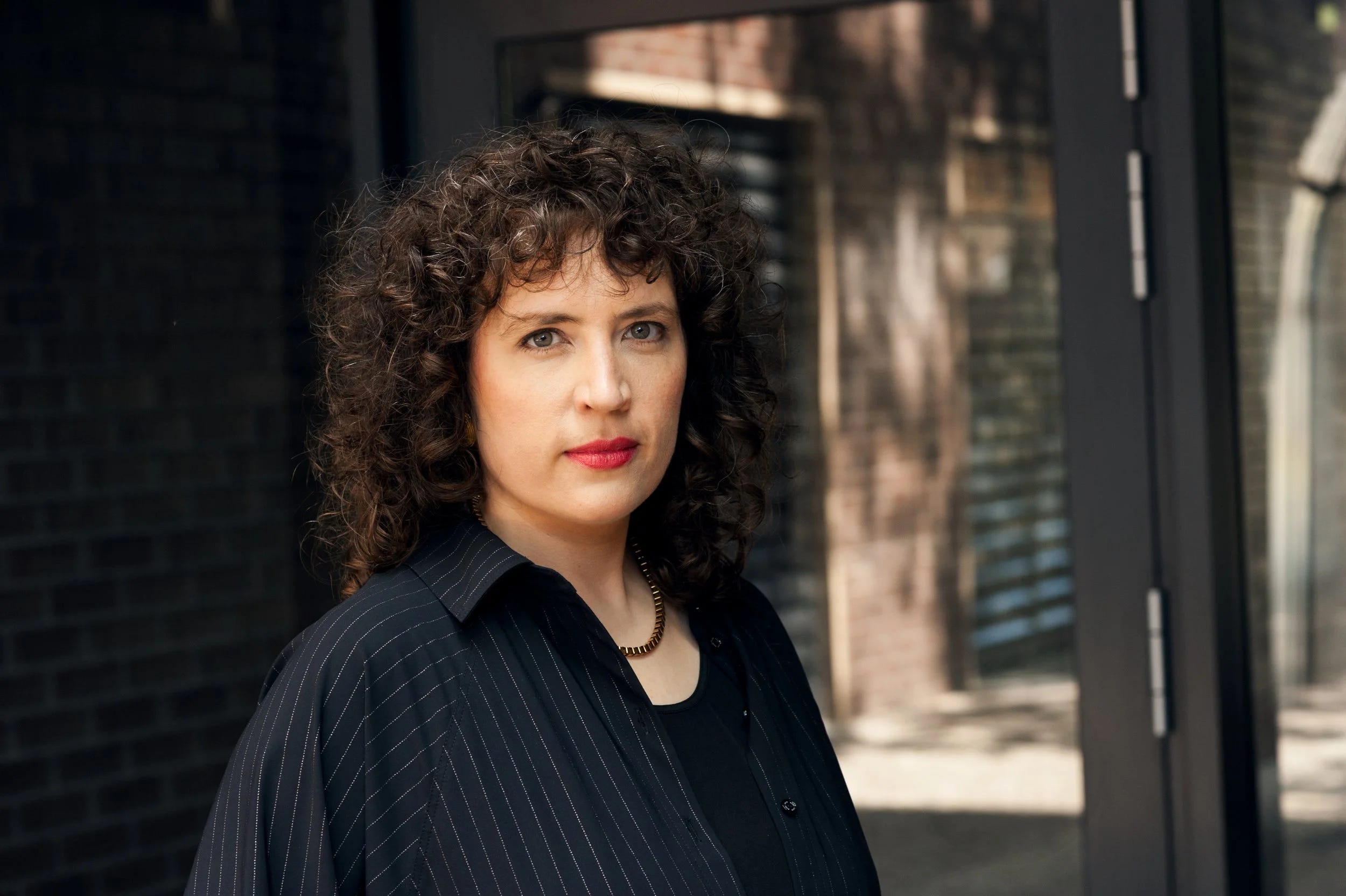
The far right, in recent years, has been on an electoral upswing worldwide, winning elections across Europe and Latin America. In the United States, Donald Trump’s return to the White House — almost certainly the result of voters’ economic dissatisfactions — has led to an epic wave of corporate corruption, with the president and his family profiting at the center of it. According to economist Isabella Weber, all of this is an indicator we are once again facing the threat of a return to 1930s-style fascism. In her new book, Anti-Fascist Economics: In Defense of Affordability, Dignity, and Democracy, she makes the argument that reversing this trend and defending democracy requires confronting the economic insecurity that fuels it. Economic Liberties’ Communications Associate Zachary Hagen-Smith recently spoke with Weber about the rise of the far right and the economic alternative needed to counter it.
This interview has been edited for length and clarity.
What is anti-fascist economics?
We are at a point where the economic status quo has become unbearable for too many. Instead of letting the far right lead that change, we need an alternative economics playbook centered on people’s dignity that confronts the extreme forms of concentration of corporate power.
The job of economists is not to define the goals and explain to the world how the economy should look. Our job instead is to help implement democratically determined goals. We have a very strong sentiment in the U.S. and around the world that we have a deep cost of living crisis. We have an inequality and power concentration crisis that has to be tackled. Our job as economists is to help make that happen.
A core contention throughout your book is that bad economics spurs the rise of fascism. Why is that the case?
The rise of fascism is a very complex historical process, so there’s no one reason for it. But as economists, we have to acknowledge that our science has major consequences for political outcomes. For me the key here really lies in thinking of Karl Polanyi [a 1940s Hungarian-American economist]. Karl Polanyi has this concept of “The Fascist Virus.” It starts with the false notion that when governments intervene in the market they make things worse, so leaders have to impose the market order, even against people’s will. People though want the government to intervene when it comes to questions of wages, famine relief, and unemployment. These are all things where people will be on the side of protecting their livelihoods against market forces. When people enter a crisis of livelihoods as we are right now and then governments insist on not being able to do anything for their people, then you break the trust in democracy.
How did the rise of fascism in the 1930s rely on bad economics, and what lessons does that teach us?
One theme that emerges across different schools of thought, including neoliberalism, is the extreme concentration of corporate power in [Weimar] Germany. Once Hitler came to power, it took a handful of people switching sides for the Nazis to consolidate their control over the industrial backbone of the country. It is clear that that the Nazi regime did benefit those business elites that were not Jewish or branded as enemies. Profits went up.
After the war, this idea of an anti-fascist antitrust agenda was actually a key conclusion on both sides of the Atlantic. Having an antitrust that dares to break up cartels was seen as necessary to safeguard democracy.
In what ways did FDR economically respond to the threat of fascism?
The fascist threat in the United States was also quite real by the time that he came to power. One of the first things that Roosevelt did was to take the United States off the gold standard, which was really the core of economic orthodoxy at the time. This was kind of like the deficit rules of their day. Without it, FDR could have his large-scale public investments, direct employment programs, infrastructure projects, his programs for the arts, and so on.
By confronting the Great Depression with direct state action, Roosevelt demonstrated that the democratic state could improve the material lot of its people. To restore trust in the democratic state you need the state to be able to act effectively.
How was anti-fascist economics hollowed out in the decades after World War II?
After the war, the sense was that states can plan quite effectively. Then the question became if we could do it for war, why can’t we do it for peace? If we can build arsenals of democracy, why can’t we build public housing and public infrastructure? You had a consensus that you could aim for full employment and low inflation.
However, with the rise of McCarthyism and the neoclassical synthesis, you get this hollowed out form of Keynesianism without what we today call industrial policy. Instead of the New Deal, where the state actually had the capacity to do concrete projects, it becomes these pretty mathematical signs of macroeconomic aggregates. You get this interpretation to say that Keynesianism was always about the Phillips curve, a trade-off between unemployment and inflation. But during the seventies stagflation, you had a combination of unemployment and inflation, therefore this kind of Keynesian economics didn’t make sense. That opens the door for the defeatism of [University of Chicago economist] Milton Friedman that whenever the state tries to do anything good all it does is create inflation. The state becomes incapable of improving people’s lot.
Around the middle of your book, you reflect on a pivotal moment when you went viral in late 2021 for a Guardian article you wrote about inflation. What did you say in that article, and why was the response so vitriolic?
The White House had come up with a brief where they started to compare the COVID inflation with the inflation after World War II — funnily what I was studying — but I felt like it was missing a lot of the historical context. In the immediate post-war moment, economists from neoliberals to institutionalists to Marxists agreed that in a situation of bottlenecks in important parts of the sectoral structure of your economy it made sense to have temporary price controls on these sectors.
At the transition from COVID to post-COVID, we had a bit of a similar situation. The structure of the economy temporarily was quite strongly shaped by the needs of the pandemic rather than profits and market dynamics. As the economy reopened, bottlenecks and supply chain issues were all over. People during COVID also got stimulus checks. The combination of bottlenecks and people having some money to spend drove up prices and generated increases in profits margins and windfall profits. In the business press, they were already reporting about margins going up in unprecedented ways and this being an extremely profitable moment.
In the Guardian piece, I basically said two things. The first thing I said was that inflation had to do with profits. This was not just workers asking for too high wages. The second thing I said was where we have bottlenecks in essential sectors, we should start thinking about emergency, targeted price controls. I actually thought that this was a quite cautiously articulated article that, tried to do a kind of here’s a lesson from American history kind of a take. The reaction shows how far we have moved away from the postwar consensus.
What caused pandemic inflation, and how does that compare with the factors driving inflation today?
What we had was price explosions at the beginning of the value chain and the flip side of basically windfall profits. The bottlenecks were for reasons such as ships not getting through the port of L.A. The question was does the corporate sector absorb these cost increases or are they passing them on? If they are passing them on, in what kind of way were they passing them on? What we show in our research is that the dominant trend is basically margin protection, which let you increase your unit profits. Some corporations also managed to, on top of this, actually increase their margins.
Fast forward to today, the big similarity is that we have again a major shock to the energy sector, very similar to what happened in the wake of the Russian attack on Ukraine. The big difference is that this shock has been engineered by the American government, which raises the question whether companies that have experienced turmoil leading to record profits might have some stake in an economy run on shocks. We are seeing again energy prices spiking and windfall profits in the energy sector going up. To what extent we get the same kind of sellers inflation passed through, it’s a bit too early to say. The data is just starting to come in. I would expect that we basically see the same playbook that we saw last time around. If we then have interest rate hikes, then this is actually punishing those who are at the losing end of this inflation a second time.
What made inflation different for poorer people compared to well-off ones?
Let’s start with the profit channel. Our research on the fossil fuel industry shows that 50% of those record profits in 2022 went to the richest one percent, and the bottom 50% only got one percent of those profits. The total inflation burden of the top 1% is about compensated by the increase in income that they get from those fossil fuel profits alone.
Lower income groups have significantly higher inflation burdens because they spend almost all their income — or even more than their income if they’re in debt — higher income groups spend only a fraction of their income on consumption. What’s more, if you have a lower income, you actually also spend much larger shares of your income on essentials, like food, energy, housing, transportation, and forms of care. All of these things actually increased in price much more than overall CPI, which is what economists call a plutocratic index.
There are many more inequalities, too. There’s cheapflation, when cheaper things becoming more expensive quicker. On top of this, there are product tiers. Take diapers. There are probably ten types of diapers, from luxurious to the cheapest store brand. If prices go up and you used to buy the most expensive one, then you still can downgrade. But if you used to already buy the cheapest one, you have no way of downgrading to something cheaper.
How did that translate to policymakers?
This is the whole “vibecession.” In 2024, in poll after poll, people were saying we are experiencing real economic insecurity and even hardship. Economists went out and said this is just vibes because I’m not seeing it in my data.
However, we saw food insecurity going up, housing insecurity going up, even homelessness going up. Simple indicators of economic well-being and economic insecurity were flashing the alarm lights. People have an understanding of their pocketbooks, but economists were lecturing them. For democracy to thrive and be defended, we need to take very seriously what people are saying about how they’re experiencing their everyday economic reality.
How did the US response to post-pandemic inflation compare with that of other countries?
It’s important to acknowledge that America’s fiscal spending and rescue packages actually buffered the monetary austerity that was imposed with the hiking of interest rates. Many countries chose damaging austerity. Others were more aggressive against inflation. The Mexican government, in the food sector, drew up a basket of food essentials and then agreed on a price for this whole basket with the large grocery chains, and they had to commit to keeping that price for the overall basket stable. The president would go and have press conferences every week reporting on how well or poorly companies are performing in relationship to this agreement.
What are the big takeaways you’d want policymakers and readers to leave your book with?
We need to reclaim the idea of freedom from free marketeers, because they reduce freedom to market participation. The more corporate concentration, the less freedom ordinary people have.
Another key lesson is the need to ensure public access to affordable essentials for all. This is the material foundation on which a dignified life and freedom rests. This means not only a revival of anti-fascist antitrust, but building public power.
Another element is climate change and securing sustainable foundations for our livelihoods. This means that in the food sector, we need an ambitious climate agenda that extends into agriculture, including buffer stocks that do counter-cyclical open market operations. You could use this public procurement capacity to incentivize the production of climate-resilient crops and climate-friendly agricultural practices to create a combination of immediate relief through price stabilization, and then policies of structural transformation to change the ways in which we provision essentials in order to make it compatible with sustained life on Earth.
If you put this together, then you not only get a stabilization regime where you no longer rely on hiking interest rates when faced with supply shock inflation, but you actually make your essentials less vulnerable to shocks. This gives you space to pursue a full employment policy.
Roosevelt taught us that if we defeated fascism in the battlefield abroad without ruling out economic insecurity at home, we would continue to be vulnerable to the return of fascism. Roosevelt’s insight should be the north star of an anti-fascist economics and and quite frankly for renewal of American democracy.
You can purchase Isabella Weber’s book here.
So it was greedy corporations and broken supply chains that caused the 40% jump in prices, not the 40% increase in the money supply? 🤣
Cheers for Polanyi! Never understood why he wasn't more popular.
I would like to hear some time, just to plant a seed, about the selection effects of the economics "profession". I thought about going to econ grad school, and I know a number of people who did, but we thought the field was a bit phoney-baloney (as-if modeling, ignoring computational complexity, redefining efficiency, formulaicism, false positives from econometrics, all of macro, extreme school/professor elitism, freshwater vs saltwater, even the phony Nobel). And if you look at the econjobrumors forum, those people are astoundingly horrible--could you imagine working with people like that?
Anyway, just thinking that possibly the fascistic tilt has something to do with who is going into economics in the first place.